
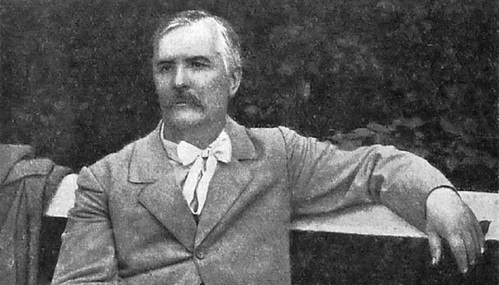
Mykola Lysenko. Photo from Wikimedia Commons
It seems we know everything there is to know about the composer – until we start listening closely to his music.
On 9 August, the Lviv Organ Hall will host a piano programme prepared by students from the class of Maria Pukhlyanko, Honoured Artist of Ukraine. It is precisely these works – vivid, emotional and full of subtle nuances – that make us wonder: do we really picture Lysenko as he truly was?
On 9 August, the Lviv Organ Hall will host a piano programme prepared by students from the class of Maria Pukhlyanko, Honoured Artist of Ukraine. It is precisely these works – vivid, emotional and full of subtle nuances – that make us wonder: do we really picture Lysenko as he truly was?
We have grown accustomed to viewing Mykola Lysenko through the prism of a textbook image: for most people, he has forever remained the ‘founder of Ukrainian classical music’. This monumental figure – from monuments, textbooks and the names of musical institutions – dominates our perception to such an extent that it is almost impossible to see the real person behind it. But if we listen closely to how he creates his “Moment of Enchantment”, how he speaks to us through the “Farewell Waltz” or the “Melancholic Waltz”, it becomes clear: before us stands not a monument, but a composer who felt deeply, had his doubts, and defended Ukrainian music’s right to its own voice.
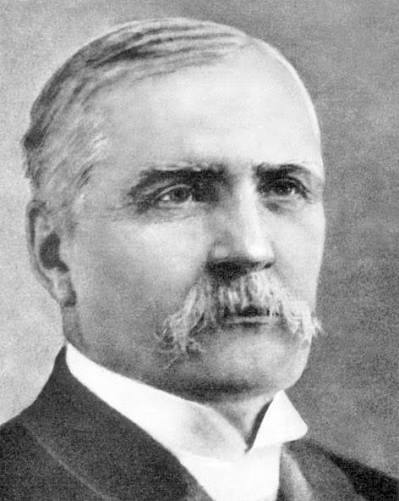
Mykola Lysenko. Photo from Wikimedia Commons
Most portraits of Lysenko are similar: a high forehead, a thick moustache, an elegant suit. This is the classic “ceremonial” image, which over the years has become an official symbol. Yet behind this appearance lies not only a success story, but also a man who consciously chose his own path. Let’s try for a moment to set aside this stereotype to see the true magnitude of his personality.
Lysenko enabled Ukrainian music to convey the depth of human emotions with the same candour characteristic of the finest European Romanticism. It was precisely this perspective that took definitive shape during his studies at the Leipzig Conservatoire. There he came to realise that art is not merely about beauty or splendour, but above all an intensely intimate conversation capable of capturing the subtlest stirrings of the soul.
In his solo songs, Lysenko transformed the poetry of Taras Shevchenko and Lesya Ukrainka into profound psychological dramas, in which every nuance of intonation conveys the barely perceptible shades of human pain, tenderness or hope. In his operas, he eschewed formulaic numbers, focusing instead on the inner worlds of his characters. Even choral music ceased to be merely a solemn collective sound – it took on a personal tone, reflecting on freedom, destiny and human dignity.
Perhaps Lysenko speaks most candidly when sitting at the piano. Here there is no grand stage, no theatrical effects or complex drama – just the composer and his instrument. This is particularly evident in the “Summer Albums” – cycles of piano miniatures that resemble musical diaries of the innermost thoughts: the ethereality of first love, quiet joy, melancholy and profound inner experiences.
However, it would be a mistake to think that Lysenko lived solely in the world of high art. One of the most important endeavours of his life was the recording of folk songs. Just imagine: he painstakingly recorded and edited over 1,500 folk songs, transforming them into a veritable treasure trove. But for him, this was not simply a matter of collecting folklore “for the archives”. He sought to understand how Ukrainian music truly lives: how peasants sing, how a “duma” unfolds on the lips of a kobzar, and what makes a folk melody instantly recognisable from the very first notes. That is precisely why Lysenko held the kobzar Ostap Veresai in such high regard: he sought in his singing not “museum-piece antiquity”, but that genuine, living emotion which makes music not merely notes on paper, but a part of the human soul.
This naturalness also formed the basis of his operas. Listen to “Natalka Poltavka”, “Taras Bulba” or even the comic “Aeneid” – and you will hear how the music echoes the natural intonations of the Ukrainian language. Lysenko did not force the Ukrainian language to conform to pre-existing operatic conventions. On the contrary – he allowed the language itself to give birth to the melody. His characters do not simply sing. They talk, argue, joke, fall in love and suffer exactly as they do in real life. It is precisely this “conversational” nature of the music that makes his operas remarkably vivid even centuries later.
At the same time, Lysenko was by no means a stern academic. He was thoroughly familiar with the world of domestic music-making, salon evenings and balls. His oeuvre includes waltzes, mazurkas, polonaises, romances and scherzos – music that was performed with pleasure not only by professionals but also by amateurs. He demonstrated that true mastery need not necessarily be complex for the listener. It can be light, refined, dance-like – and at the same time impeccably professional.
Lysenko later brought this same naturalness and lightness to his music for children. His children’s operas “Koza-Dereza”, “Pan Kotsky” and “Winter and Spring” were a real breakthrough. At a time when opera remained an art form primarily for adults, he created a fully-fledged musical theatre for young audiences. He did not seek easy solutions or simplistic melodies; instead, he placed boundless trust in children’s ability to perceive true beauty.
Lysenko enabled Ukrainian music to convey the depth of human emotions with the same candour characteristic of the finest European Romanticism. It was precisely this perspective that took definitive shape during his studies at the Leipzig Conservatoire. There he came to realise that art is not merely about beauty or splendour, but above all an intensely intimate conversation capable of capturing the subtlest stirrings of the soul.
In his solo songs, Lysenko transformed the poetry of Taras Shevchenko and Lesya Ukrainka into profound psychological dramas, in which every nuance of intonation conveys the barely perceptible shades of human pain, tenderness or hope. In his operas, he eschewed formulaic numbers, focusing instead on the inner worlds of his characters. Even choral music ceased to be merely a solemn collective sound – it took on a personal tone, reflecting on freedom, destiny and human dignity.
Perhaps Lysenko speaks most candidly when sitting at the piano. Here there is no grand stage, no theatrical effects or complex drama – just the composer and his instrument. This is particularly evident in the “Summer Albums” – cycles of piano miniatures that resemble musical diaries of the innermost thoughts: the ethereality of first love, quiet joy, melancholy and profound inner experiences.
However, it would be a mistake to think that Lysenko lived solely in the world of high art. One of the most important endeavours of his life was the recording of folk songs. Just imagine: he painstakingly recorded and edited over 1,500 folk songs, transforming them into a veritable treasure trove. But for him, this was not simply a matter of collecting folklore “for the archives”. He sought to understand how Ukrainian music truly lives: how peasants sing, how a “duma” unfolds on the lips of a kobzar, and what makes a folk melody instantly recognisable from the very first notes. That is precisely why Lysenko held the kobzar Ostap Veresai in such high regard: he sought in his singing not “museum-piece antiquity”, but that genuine, living emotion which makes music not merely notes on paper, but a part of the human soul.
This naturalness also formed the basis of his operas. Listen to “Natalka Poltavka”, “Taras Bulba” or even the comic “Aeneid” – and you will hear how the music echoes the natural intonations of the Ukrainian language. Lysenko did not force the Ukrainian language to conform to pre-existing operatic conventions. On the contrary – he allowed the language itself to give birth to the melody. His characters do not simply sing. They talk, argue, joke, fall in love and suffer exactly as they do in real life. It is precisely this “conversational” nature of the music that makes his operas remarkably vivid even centuries later.
At the same time, Lysenko was by no means a stern academic. He was thoroughly familiar with the world of domestic music-making, salon evenings and balls. His oeuvre includes waltzes, mazurkas, polonaises, romances and scherzos – music that was performed with pleasure not only by professionals but also by amateurs. He demonstrated that true mastery need not necessarily be complex for the listener. It can be light, refined, dance-like – and at the same time impeccably professional.
Lysenko later brought this same naturalness and lightness to his music for children. His children’s operas “Koza-Dereza”, “Pan Kotsky” and “Winter and Spring” were a real breakthrough. At a time when opera remained an art form primarily for adults, he created a fully-fledged musical theatre for young audiences. He did not seek easy solutions or simplistic melodies; instead, he placed boundless trust in children’s ability to perceive true beauty.
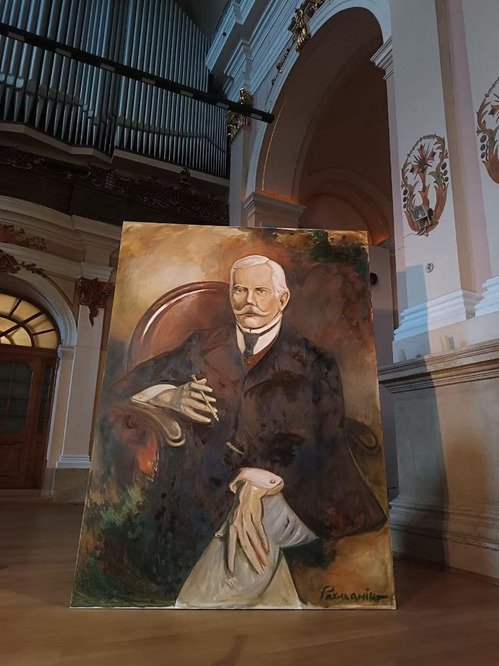
Mykola Lysenko. Portrait by Hlib Rakhmanin in the Lviv Organ Hall
Thousands of pages have been written about Lysenko. His contribution has long been beyond dispute. But perhaps it is more important to ask another question: do we want to listen to his music today?
The answer comes very quickly – one need only sit in a concert hall and let this music play without any preconceptions. Then it suddenly becomes clear that Lysenko is not at all the stern classical composer depicted on a monument. He is witty, tender, at times melancholic, at times brilliantly ironic. And, most surprisingly, he is closer to us than we are used to thinking.
The answer comes very quickly – one need only sit in a concert hall and let this music play without any preconceptions. Then it suddenly becomes clear that Lysenko is not at all the stern classical composer depicted on a monument. He is witty, tender, at times melancholic, at times brilliantly ironic. And, most surprisingly, he is closer to us than we are used to thinking.
Text: Tetiana Liteplo
Posted in Periodical