
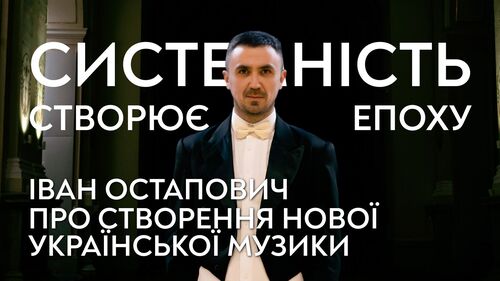
"One premiere is an event. Ten premieres are a trend."
So says Ivan Ostapovych, co-director of the Lviv Organ Hall and co-creator of the Ukrainian Live Classic project.
Together with Taras Demko, he has shaped a unique institutional model where new Ukrainian music is born alongside Bach and Mozart, and premieres become a vital part of cultural diplomacy.
Today, we present an interview with Ivan Ostapovych, originally published in Muzyka magazine.
How was the idea born to commission music from contemporary Ukrainian composers? What are the criteria for selecting authors and works? In his own words:
— We wanted the Organ Hall to be more than just a stage for reproduction; we wanted it to be a place where music is born. The first commissions were an experiment, but once we heard the result, we decided this should become our permanent practice.
The main criterion [in choosing authors] is the presence of a distinct, highly individual voice in their music. We don't care about "hype" or the number of social media followers. We look at the score. I pay attention to professional craftsmanship: how the author hears the orchestra, how they build the form. But most importantly, is there a thought, a nerve, an emotion in this music?
We try to cover different generations and styles: from masters like Oleksandr Shchetynsky or Zoltan Almashi to very young authors. Our goal is to showcase the full palette. Ukrainian music is incredibly diverse, and we want this variety to be reflected in our commissions.
We believe in the principle of complete freedom. The only restrictions we set are technical: the instrumentation (for example, for strings or for organ) and the approximate duration. Regarding content — we never dictate what to write about. Especially when it comes to the theme of war. It is too delicate a matter. Composers live in this reality; they feel it as acutely as we do. That is why the works of Bezborodko, Rodin, or Pilyutikov sound so poignant—it is their sincere reflection. We provide the canvas, and the artist paints the picture.
...
Our commissions are dedicated to the present day not by force, but naturally. A composer is a resonator of the era. We simply give them the opportunity to be heard. And as practice shows, it is precisely this freedom that gives birth to the most powerful works.
So says Ivan Ostapovych, co-director of the Lviv Organ Hall and co-creator of the Ukrainian Live Classic project.
Together with Taras Demko, he has shaped a unique institutional model where new Ukrainian music is born alongside Bach and Mozart, and premieres become a vital part of cultural diplomacy.
Today, we present an interview with Ivan Ostapovych, originally published in Muzyka magazine.
How was the idea born to commission music from contemporary Ukrainian composers? What are the criteria for selecting authors and works? In his own words:
— We wanted the Organ Hall to be more than just a stage for reproduction; we wanted it to be a place where music is born. The first commissions were an experiment, but once we heard the result, we decided this should become our permanent practice.
The main criterion [in choosing authors] is the presence of a distinct, highly individual voice in their music. We don't care about "hype" or the number of social media followers. We look at the score. I pay attention to professional craftsmanship: how the author hears the orchestra, how they build the form. But most importantly, is there a thought, a nerve, an emotion in this music?
We try to cover different generations and styles: from masters like Oleksandr Shchetynsky or Zoltan Almashi to very young authors. Our goal is to showcase the full palette. Ukrainian music is incredibly diverse, and we want this variety to be reflected in our commissions.
We believe in the principle of complete freedom. The only restrictions we set are technical: the instrumentation (for example, for strings or for organ) and the approximate duration. Regarding content — we never dictate what to write about. Especially when it comes to the theme of war. It is too delicate a matter. Composers live in this reality; they feel it as acutely as we do. That is why the works of Bezborodko, Rodin, or Pilyutikov sound so poignant—it is their sincere reflection. We provide the canvas, and the artist paints the picture.
...
Our commissions are dedicated to the present day not by force, but naturally. A composer is a resonator of the era. We simply give them the opportunity to be heard. And as practice shows, it is precisely this freedom that gives birth to the most powerful works.
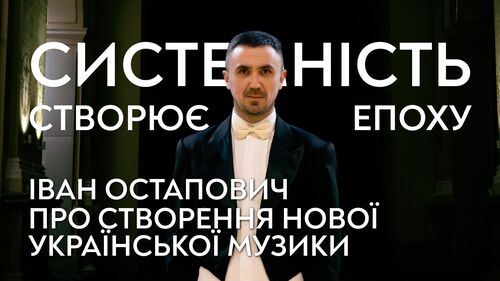
"Одна прем’єра – це подія. Десять прем’єр – тенденція".
Так каже Іван Остапович один із співдиректорів Львівського органного залу та співавторів проєкту Ukrainian Live Classic.
Разом із Тарасом Демком він сформував унікальну модель інституції, де поруч із Бахом і Моцартом народжується нова українська музика, а прем’єри стають частиною культурної дипломатії.
Сьогодні пропонуємо вашій увазі інтерв'ю з Іваном Остаповичем, що вийшло у журналі "Музика".
Як народилася ідея замовляти музику сучасним українським композиторам? Які критерії відбору авторів та творів? Далі – пряма мова:
– Ми хотіли, щоб Органний зал став не просто сценою для відтворення, а місцем народження музики. Перші замовлення були експериментом, але коли ми почули результат, вирішили, – це має бути нашою постійною практикою.
Головний критерій [у виборі авторів] – це наявність власного, яскраво індивідуального обличчя в музиці. Нам не важливі «розкрученість» чи кількість підписників у соцмережах. Ми дивимося в партитуру. Я звертаю увагу на професійну майстерність: як автор чує оркестр, як будує форму. Але найважливіше – чи є в цій музиці думка, нерв, емоція.
Намагаємося охопити різні генерації та стилі: від метрів, як Олександр Щетинський або Золтан Алмаші, до зовсім молодих авторів. Наша мета – показати палітру. Українська музика дуже різна, і ми хочемо, щоб у наших замовленнях ця різноманітність була відображена.
Ми сповідуємо принцип повної свободи. Єдині обмеження, які ставимо, – технічні: склад виконавців (наприклад, для струнних або для органа) та орієнтовний хронометраж. Що стосується змісту – ніколи не диктуємо про що писати. Особливо коли йдеться про тему війни. Це занадто тонка матерія. Композитори живуть у даній реальності, вони відчувають її так само гостро, як і ми. Тому твори Безбородька, Родіна чи Пілютікова звучать так пронизливо, – адже це їхня щира рефлексія. Ми надаємо полотно, а картину малює митець.
...
Наші замовлення присвячені сьогоденню не примусово, а природно. Композитор – це резонатор епохи. Ми просто даємо йому можливість звучати. І, як показує практика, саме така свобода народжує найсильніші твори".
Так каже Іван Остапович один із співдиректорів Львівського органного залу та співавторів проєкту Ukrainian Live Classic.
Разом із Тарасом Демком він сформував унікальну модель інституції, де поруч із Бахом і Моцартом народжується нова українська музика, а прем’єри стають частиною культурної дипломатії.
Сьогодні пропонуємо вашій увазі інтерв'ю з Іваном Остаповичем, що вийшло у журналі "Музика".
Як народилася ідея замовляти музику сучасним українським композиторам? Які критерії відбору авторів та творів? Далі – пряма мова:
– Ми хотіли, щоб Органний зал став не просто сценою для відтворення, а місцем народження музики. Перші замовлення були експериментом, але коли ми почули результат, вирішили, – це має бути нашою постійною практикою.
Головний критерій [у виборі авторів] – це наявність власного, яскраво індивідуального обличчя в музиці. Нам не важливі «розкрученість» чи кількість підписників у соцмережах. Ми дивимося в партитуру. Я звертаю увагу на професійну майстерність: як автор чує оркестр, як будує форму. Але найважливіше – чи є в цій музиці думка, нерв, емоція.
Намагаємося охопити різні генерації та стилі: від метрів, як Олександр Щетинський або Золтан Алмаші, до зовсім молодих авторів. Наша мета – показати палітру. Українська музика дуже різна, і ми хочемо, щоб у наших замовленнях ця різноманітність була відображена.
Ми сповідуємо принцип повної свободи. Єдині обмеження, які ставимо, – технічні: склад виконавців (наприклад, для струнних або для органа) та орієнтовний хронометраж. Що стосується змісту – ніколи не диктуємо про що писати. Особливо коли йдеться про тему війни. Це занадто тонка матерія. Композитори живуть у даній реальності, вони відчувають її так само гостро, як і ми. Тому твори Безбородька, Родіна чи Пілютікова звучать так пронизливо, – адже це їхня щира рефлексія. Ми надаємо полотно, а картину малює митець.
...
Наші замовлення присвячені сьогоденню не примусово, а природно. Композитор – це резонатор епохи. Ми просто даємо йому можливість звучати. І, як показує практика, саме така свобода народжує найсильніші твори".