
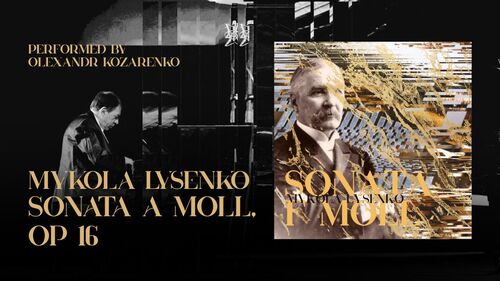
Mykola Lysenko's Sonata in A Minor, Op. 16 (1875) is a work that seemed to be waiting for its performer. Although it is the composer's only piano sonata and one of the most important examples of the genre in nineteenth-century Ukrainian music, it remained almost absent from the concert repertoire for many years. It was only in 2003 that pianist, composer, and musicologist Oleksandr Kozarenko became the first contemporary Ukrainian pianist to perform the work. His interpretation offered a new understanding of the sonata and revealed its remarkable artistic depth.
"When I discovered Lysenko's piano sonata, which no one had performed before and which I had never heard, I realized, first, what an extraordinary level of pianistic writing it contained; second, how rich its intertextual language was, and how modern its musical thinking sounded," Kozarenko recalled.
The first movement begins with a slow introduction, which the pianist described as a kind of lament in the style of the Ukrainian duma. The intonations of the Ukrainian epic duma and sacred kant become the starting point for the sonata's dramatic development, which gradually unfolds into the world of European Romanticism. Yet these stylistic allusions never become mere imitation. Lysenko organically weaves them into his own musical language, uniting the Ukrainian tradition with European culture.
The lyrical centre of the sonata is the Poco adagio – music of exceptional lyricism and inward contemplation. Its melodic lines resemble the human voice, while the richly layered piano texture creates the impression of hidden polyphony. For Kozarenko, this movement represented the emotional climax of the work, where the vocal nature of Lysenko's compositional style is revealed most completely.
The concluding Rondo restores the energy of motion and opens yet another dimension of the composer's musical thinking. Here, Lysenko enters into a free dialogue with the Western European tradition of Bach, Mozart, Beethoven, and Schubert while remaining unmistakably original.
Kozarenko himself described the sonata as "the musical horizon of Lysenko's world" – a work reflecting the composer's artistic ideals, brilliant pianistic craftsmanship, and aspiration to unite Ukrainian and European musical traditions into a coherent whole. Listening to this sonata, it is easy to understand why he chose this description.
The score of the sonata is available in the open-access Ukrainian Scores library, while Oleksandr Kozarenko's recording can be heard in the Ukrainian Live Classic app.
"When I discovered Lysenko's piano sonata, which no one had performed before and which I had never heard, I realized, first, what an extraordinary level of pianistic writing it contained; second, how rich its intertextual language was, and how modern its musical thinking sounded," Kozarenko recalled.
The first movement begins with a slow introduction, which the pianist described as a kind of lament in the style of the Ukrainian duma. The intonations of the Ukrainian epic duma and sacred kant become the starting point for the sonata's dramatic development, which gradually unfolds into the world of European Romanticism. Yet these stylistic allusions never become mere imitation. Lysenko organically weaves them into his own musical language, uniting the Ukrainian tradition with European culture.
The lyrical centre of the sonata is the Poco adagio – music of exceptional lyricism and inward contemplation. Its melodic lines resemble the human voice, while the richly layered piano texture creates the impression of hidden polyphony. For Kozarenko, this movement represented the emotional climax of the work, where the vocal nature of Lysenko's compositional style is revealed most completely.
The concluding Rondo restores the energy of motion and opens yet another dimension of the composer's musical thinking. Here, Lysenko enters into a free dialogue with the Western European tradition of Bach, Mozart, Beethoven, and Schubert while remaining unmistakably original.
Kozarenko himself described the sonata as "the musical horizon of Lysenko's world" – a work reflecting the composer's artistic ideals, brilliant pianistic craftsmanship, and aspiration to unite Ukrainian and European musical traditions into a coherent whole. Listening to this sonata, it is easy to understand why he chose this description.
The score of the sonata is available in the open-access Ukrainian Scores library, while Oleksandr Kozarenko's recording can be heard in the Ukrainian Live Classic app.
Text: Tetiana Liteplo
Listen to music
Слухати музику
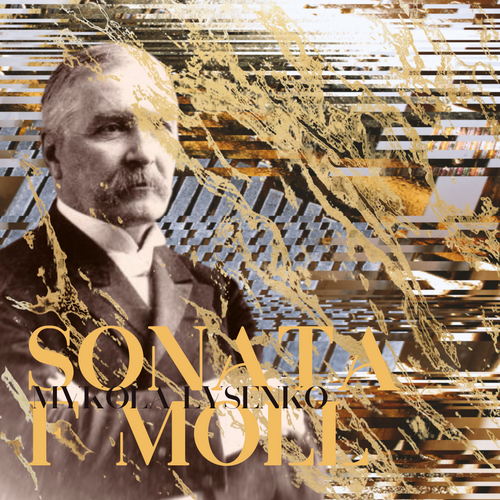
Соната a-moll op. 16
Микола Лисенко
Соната a-moll op. 16 (1875) Миколи Лисенка – твір, який ніби чекав на свого виконавця. Попри те, що це єдина фортепіанна соната в спадщині композитора й один із найважливіших зразків цього жанру в українській музиці ХІХ століття, вона тривалий час залишалася майже поза концертним репертуаром. Лише у 2003 році піаніст, композитор і музикознавець Олександр Козаренко вперше серед сучасних українських піаністів звернувся до цього твору. Саме його інтерпретація допомогла по-новому осмислити сонату.
“Коли я відкрив фортепіанну сонату Лисенка, яку ніхто до того не виконував і я ніколи не чув, я побачив, по-перше, якого високого класу це піанізм, по-друге, яка інтертекстуальна гра наповнює цей текст, наскільки він модерний за мисленням”, – згадував Козаренко.
Перша частина розпочинається повільним вступом, який піаніст називав своєрідною “думною заплачкою”. Інтонації української думи й канту стають відправною точкою драматургії сонати, що поступово розгортається у простір європейського романтизму. Але стильові алюзії на європейську музичну традицію не перетворюються на наслідування. Лисенко органічно вплітає їх у власну музичну мову, поєднуючи українську традицію з європейською культурою.
Ліричним центром сонати є Poco adagio – музика виняткової співучості та внутрішньої зосередженості. Її мелодика нагадує людський голос, а багатошарова фортепіанна фактура створює відчуття прихованого багатоголосся. Для Козаренка ця частина поставала емоційною кульмінацією твору, де найповніше розкривається вокальна природа лисенківського письма.
Фінальне Rondo повертає енергію руху й відкриває ще один вимір композиторського мислення. Тут Лисенко вступає у вільний діалог із західноєвропейською традицією – Баха, Моцарта, Бетовена й Шуберта, залишаючись при цьому впізнавано самобутнім.
Сам Козаренко називав сонату “музичним видноколом світу Лисенка” – твором, у якому відобразилися його мистецькі орієнтири, блискуча піаністична школа та прагнення органічно поєднати українську й європейську музичні традиції. Слухаючи цю сонату, легко зрозуміти, чому композитор називав її саме так.
Ноти сонати доступні у відкритій бібліотеці Ukrainian Scores, а запис у виконанні Олександра Козаренка можна прослухати в застосунку Ukrainian Live Classic.
Література:
Коменда О. Олександр Козаренко – піаніст, композитор, музикознавець: монографія. Луцьк: Вежа, 2017. 252 с.
Коменда О. Олександр Козаренко – піаніст, композитор, музикознавець: монографія. Луцьк: Вежа, 2017. 252 с.
Текст: Тетяна Літепло